Attic Design Ideas
Attics occupy the space under the roof—often charming areas with sloped ceilings, dormers, and character that can become bedrooms, offices, playrooms, or creative studios. Converting an attic adds valuable living space and often stunning architectural interest. The challenges of sloped ceilings and limited headroom become design opportunities for cozy, character-filled rooms.
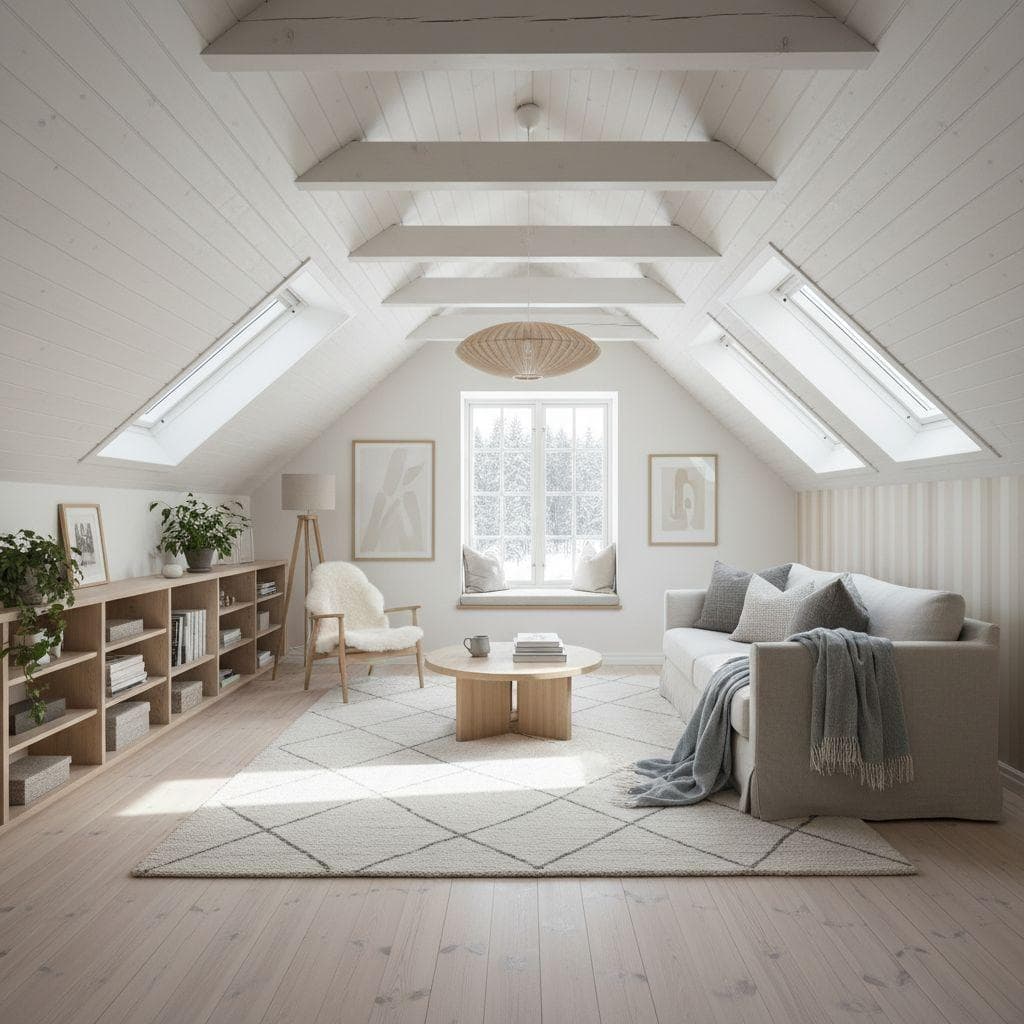
Attic in Different Styles
See how your attic can look in various design styles


About Attic Design
Attics serve as storage (unfinished) or converted living space (bedrooms, offices, playrooms, studios). They offer expansion potential with unique architectural character from roof angles and dormers.
Design Considerations
- Use knee walls for built-in storage
- Place furniture in highest ceiling areas
- Consider skylights for light and air
- Insulate well for temperature control
- Meet code requirements for habitable space
- Embrace the architectural character
- Use light colors to brighten and expand
Common Challenges
- Sloped ceilings and limited headroom
- Temperature extremes (hot in summer)
- Limited natural light
- Access (often via steep stairs)
- Structural requirements for conversion
- Electrical and HVAC needs
- Making angled walls functional
Layout Tips
- Position bed, desk, or main seating under highest ceiling
- Use areas under 5' ceiling height for storage
- Place reading nooks or kids' areas in cozy low spots
- Consider traffic flow with sloped ceilings
Best Styles for Attic
Explore design styles that work exceptionally well for attics.
Attic Furniture Guide
Essential Furniture
- Low-profile furniture for sloped areas
- Built-in storage in knee walls
- Good lighting
Optional Additions
- Bed (positioned under highest ceiling)
- Desk for office use
- Seating in dormers
- Storage built into eaves
Lighting Needs
- Skylights when possible
- Wall sconces instead of table lamps (save floor space)
- Recessed lights in flat ceiling areas
- Task lighting for work areas
Storage Solutions
- Built-in storage in knee walls
- Low storage under eaves
- Closets in dormers if possible
- Creative use of angled spaces
Size Considerations
Small Attic
Small attics work well for single functions: a reading nook, child's bedroom, or home office. Embrace the coziness rather than fighting it.
Medium Attic
Medium attics can become full bedrooms with closets built into knee walls, or multi-function spaces with distinct zones.
Large Attic
Large attics can include multiple rooms, master suites, or full living floors with dormers and skylights bringing in light.
Related Room Types
Explore other room types with similar design considerations.